
Neapoli, now a neighborhood of Kavala... is the city where Apostle Paul landed
after he saw a Macedonian man in his dream. We found a monument that depicts
Acts 16:6-11 in front of St. Nicolas Church.


Philippi... used to be a major city in the North Eastern part of Greece. The name was given by Philip II of Macedon, the father of Alexcander the Great when he conquered the region. The city flourished as the first Roman settlement, but was abandoned during 14 century by the Ottomans.
Philippi was the first city where Apostle Paul proclaimed the gospel of Christ and baptized the first Christian in Europe, Lydia. The church in Philippi was the first Christian church in Europe also. We visited Lydia's Baptistery. Some people were holding a worship service by the stream, believed to have been the place where Apostle Paul first met with the women.


We also visited Archaeological Sites where Rome's first settlement flourished and the museum. The site must have been sizable based on the size of the ruins although the current Philippi remains a small town. The Archaeological Museum was small but contained a few interesting stuff.


In this Roman settlement, Apostle Paul and Silas were imprisoned based on a charge that he expelled a ghost out of a girl who was telling the truth about Paul and his fellow ministers. This ruin below is believed to be the place where Paul was imprisoned. (Acts 16:12-40)

Philippi was the first city where Apostle Paul proclaimed the gospel of Christ and baptized the first Christian in Europe, Lydia. The church in Philippi was the first Christian church in Europe also. We visited Lydia's Baptistery. Some people were holding a worship service by the stream, believed to have been the place where Apostle Paul first met with the women.


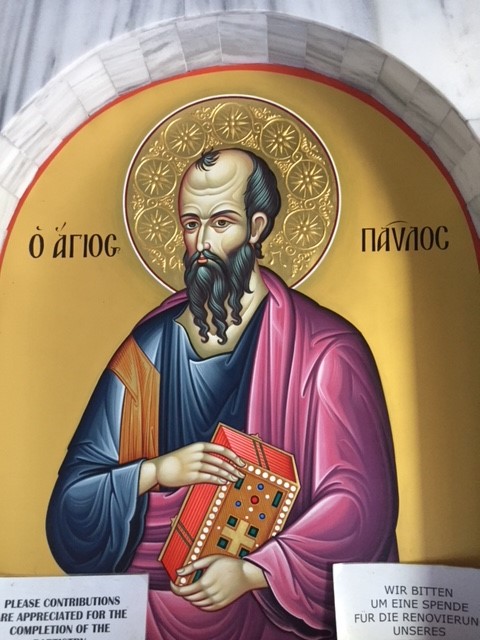


We also visited Archaeological Sites where Rome's first settlement flourished and the museum. The site must have been sizable based on the size of the ruins although the current Philippi remains a small town. The Archaeological Museum was small but contained a few interesting stuff.


Thessaloniki... is the second largest city of Greece now and
has been historically an important city in parallel to Istanbul, formerly
Constantinople of the Byzantine times.
When Apostle Paul came to this city, he went to a synagogue and proclaimed the gospel in the form of proving that Jesus was the Messiah that Jehovah God promised to the fathers of Israel. Many came to faith in Jesus, but many Jews became jealous of Paul and his teaching and put a riot against him. Paul had to leave the city through a window of the city wall, most likely Northern Wall as shown below.


But, a solid body of believers was established despite Paul's short stay over there, probably as short as 3 weeks or perhaps 2-3 months at the longest. (Acts 17:1-9; 1 and 2 Thessalonians)
When Apostle Paul came to this city, he went to a synagogue and proclaimed the gospel in the form of proving that Jesus was the Messiah that Jehovah God promised to the fathers of Israel. Many came to faith in Jesus, but many Jews became jealous of Paul and his teaching and put a riot against him. Paul had to leave the city through a window of the city wall, most likely Northern Wall as shown below.


But, a solid body of believers was established despite Paul's short stay over there, probably as short as 3 weeks or perhaps 2-3 months at the longest. (Acts 17:1-9; 1 and 2 Thessalonians)
Berea or Veria... Paul then was sent to Berea now spelled
Veria, a twin city to Thessaloniki. But, Veria is now a lot smaller than before. Many
citizens of Berea received Paul's teaching favorably and they meditated on the
gospel day and night. But, the Jews in Thessaloniki sent a mob to this town, 75 km away from
Thessaloniki, to chase him out of the city. (Acts 17:10-14)
We visited Apostle's Altar or Podium where his statue stands and where he preached. His statue was larger than the actual size, but my respect for him remained the size of his statue, probably even bigger.


We also visited the Jewish Quarter where it is believed that Apostle Paul proclaimed the gospel. Sadly, there are only two Jews living in the city. We ran into a group of Jewish people from Israel who were touring Jewish sites in Greece.


Byzantine Museum of Veria was unique with the artifacts and history.

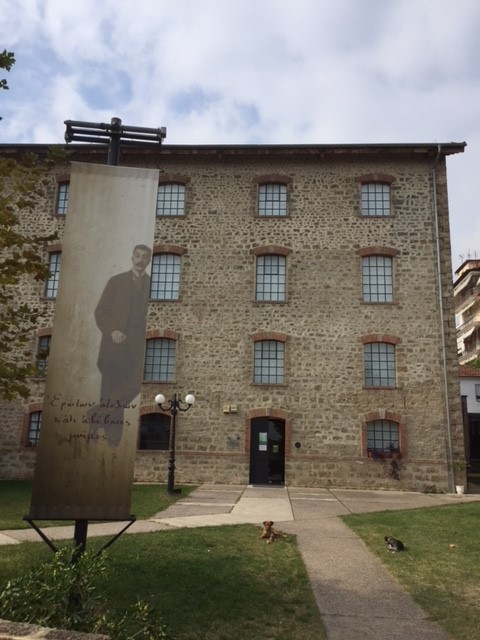


The Church of Prophet Ilias was located at the top of a hill, but it was closed.


The Old Cathedral we visited looked really old. Many walls remained damaged.


Athens...is now the capital city of Greece. It was the birthplace
of democracy, western philosophy, western civilization, and the modern day
Olympics. The ancient Olympics was started in Olympia 776 BC but was
discontinued for centuries until 1896 when it was resumed in Athens.
Athens in Ancient Greece was indeed the center of all pagan gods, man-made idols. Acropolis is a rocky hill where people gathered to vote for their version of democracy and where temples were located, particularly Parthenon. There are also other temples, reflecting the paganism.


Apostle Paul had to leave Berea also and traveled further down to Athens. There, he preached to the Athenians but many sneered at him because they were so preoccupied with the paganism. Apostle Paul mentioned that there was a No-Name God, whom Athenians referred to Jehovah God. Well... (Acts 17:15-34)
Athens in Ancient Greece was indeed the center of all pagan gods, man-made idols. Acropolis is a rocky hill where people gathered to vote for their version of democracy and where temples were located, particularly Parthenon. There are also other temples, reflecting the paganism.


Apostle Paul had to leave Berea also and traveled further down to Athens. There, he preached to the Athenians but many sneered at him because they were so preoccupied with the paganism. Apostle Paul mentioned that there was a No-Name God, whom Athenians referred to Jehovah God. Well... (Acts 17:15-34)
We visited Akrokorinthos and climbed up to the top of a hill. The view of the City of Corinth from the top was panoramic. It must have been a fortress that was quite difficult to attack.


We also visited the Ancient marketplace and temples where all actions took place, including the debate about whether it is okay for Christians to eat the meat offered to the pagan gods. Apostle Paul said that eating the food does not affect the faith. But, if your eating such food is going to stumble other weak or young believers, you should not eat them. (Acts 18:1-17; 1 and 2 Corinthians)


Akrokorinthos was located at the top of the mountain in the photo below.


There was St. Paul Cathedral, but it was closed. The building looked new and does not carry a lot of association with Apostle Paul.

We also visited the Corinth Canal that was built in 1893.

The city has a small marina, far too small compared to the bustling port in the Ancient Corinth. A forklore museum was closed at 1pm.


Overall, our travel to visit the places where Paul ministered was informative and enlightening. The bible verses came alive from the places we visited. I am deeply grateful for the opportunity to visit such places. - Jeffrey


